
6063-T6 Extruded Aluminum: The Backbone of a Premium Louvered Pergola
When you shop for an aluminum pergola, you are really shopping for a small piece of architecture. It has the difficult task of surviving outside for decades while opening and closing thousands of times. The biggest predictor of whether it will do that well is the durability of the metal it is made from, and how that metal is formed and finished. Most spec sheets compress all of that into one phrase, 6063-T6 extruded aluminum, then leave you to figure out what it means. Today we’ll explain what is so special about 6063-T6 Aluminum, and why it matters when it comes to a lasting louvered pergola system.
Breaking down the name 6063-T6 extruded aluminum
The phrase 6063-T6 extruded aluminum has three parts, and each one tells you something different. 6063 indicates the alloy, which tells you what the metal is made of. T6 gives the temper, which tells you how strong it is. The forming method tells you how the shape was created, in this case extrusion.
6063: the alloy
Pure aluminum is soft, so it is almost always blended with other metals to improve strength and durability. Those blends are called alloys, and each one gets a number.
6063 sits in the 6000 series, which uses magnesium and silicon as its main alloying elements. It is widely known as an architectural alloy, because it is the metal behind window frames, door frames, railings, and storefronts. 6063 alloy earns that role for its three qualities that also happen to work perfectly for the needs of a modern pergola:
- It resists corrosion in rain, humidity, and coastal air.
- It forms cleanly into complex shapes.
- It holds a high quality finish.
Quick definition. An alloy number like 6063 tells you the recipe of the metal. It does not, on its own, tell you how strong the finished part is. For that you need the temper.
T6: the temper
The temper is the heat treatment, and it is where a soft extrusion becomes a structural one.
In basic terms, T6 means the aluminum has been solution heat treated and then artificially aged. During this process, the metal runs through a controlled heat and cool cycle that lets microscopic strengthening particles form inside it. T6, which is what Apollo uses, is the peak strength condition for this alloy, making it perfect for spanning patios and securing louvers through a windstorm.
Typical 6063-T6 properties land near 31,000 psi yield strength and 35,000 psi tensile strength, but don’t worry to much about the figures. The main takeaway is that a real spec always names both the alloy and the temper, because it’s the temper is telling you the structural integrity.
Extruded: the forming method
Extrusion is the part most buyers skip over, and it is arguably the most important of the three.
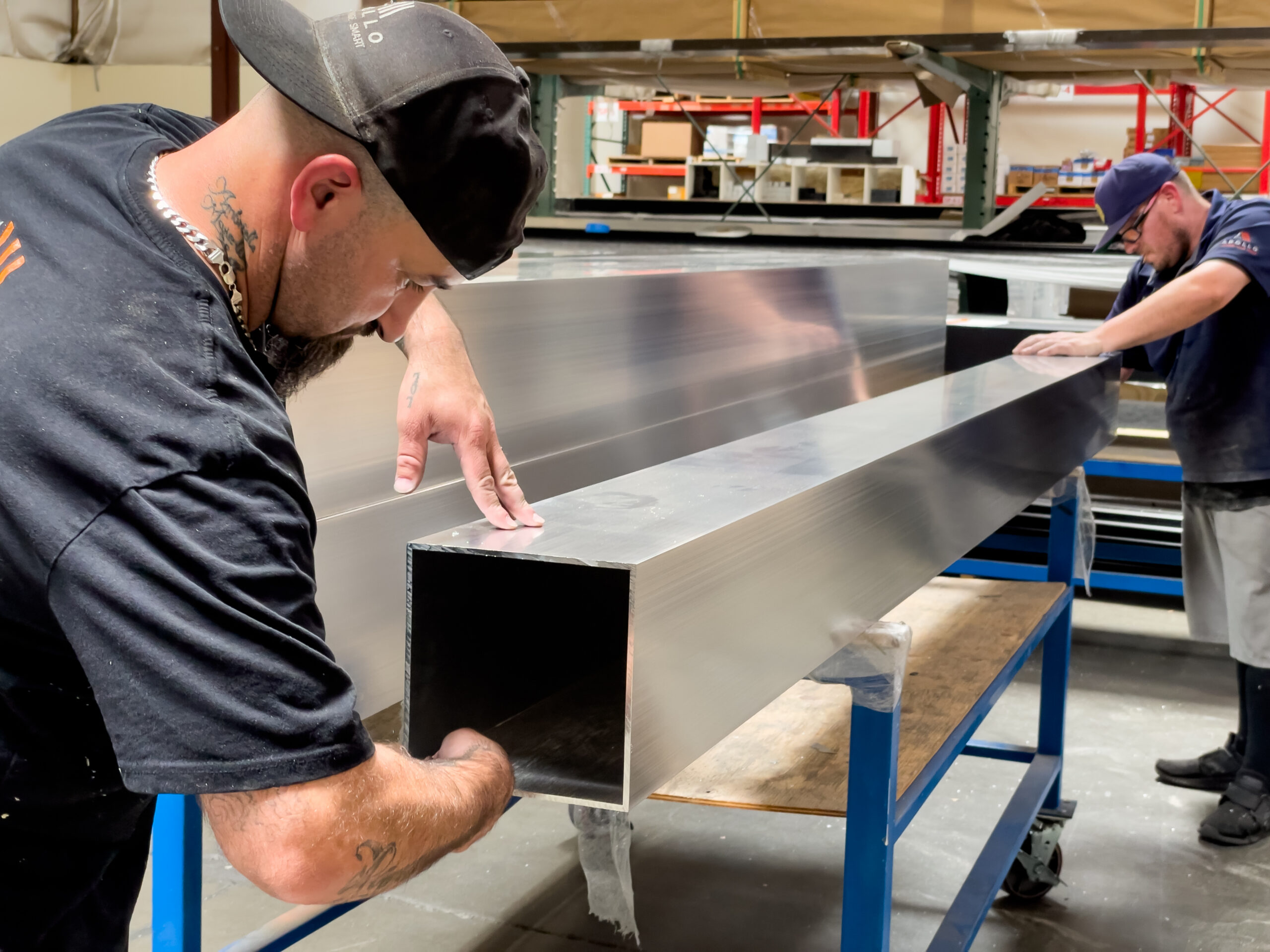
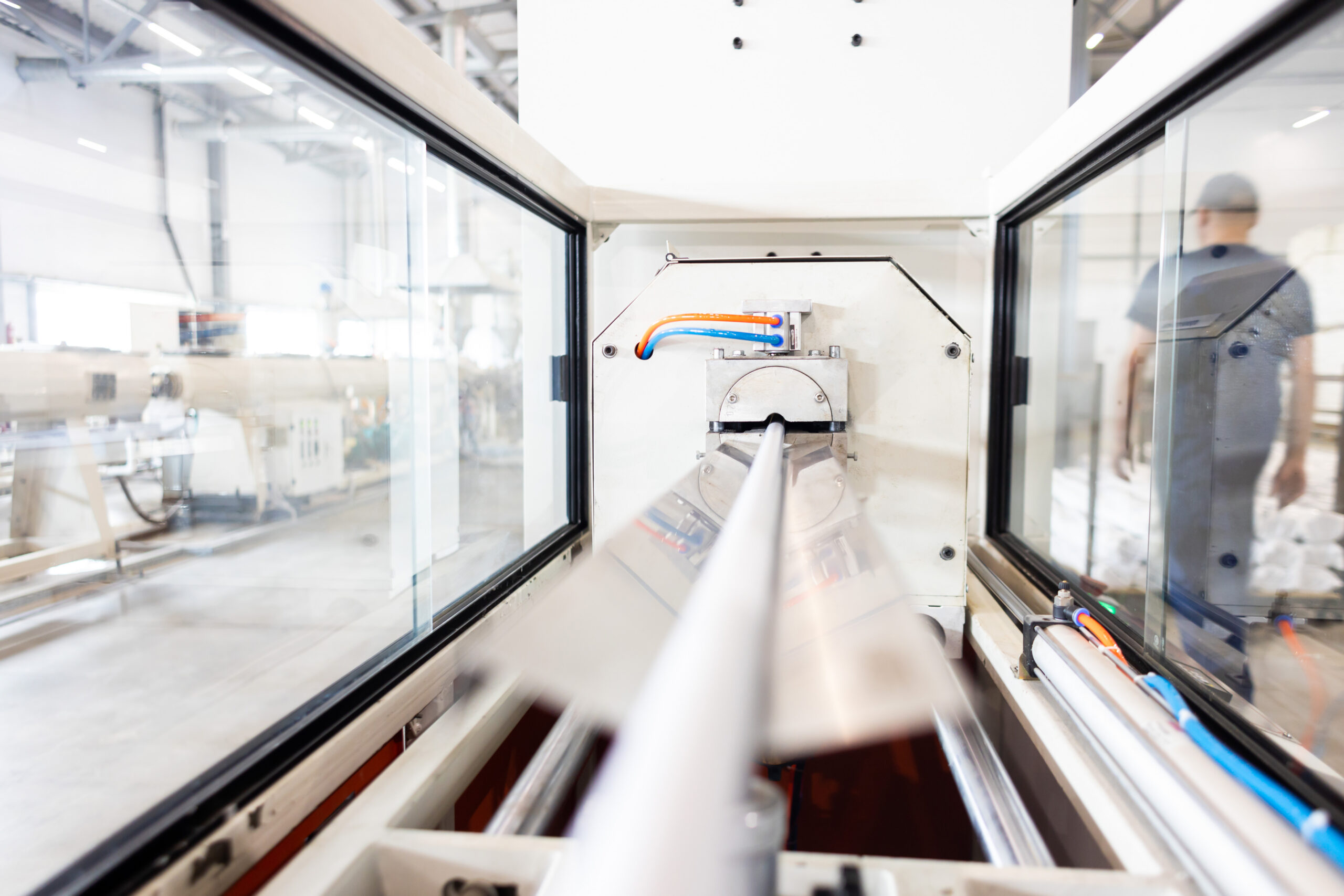
To extrude aluminum, a heated billet is forced through a shaped steel die under enormous pressure, a little like pressing dough through a mold. Whatever shape is cut into the die becomes the cross section of the finished part, and it stays consistent along the entire length.
That capability is what lets engineers design hollow profiles with internal walls and webs. A louver blade or a beam can be built with reinforced ribs on the inside, placing stiffness exactly where it’s needed without adding extra mass. Extrusion gives aluminum the strength to hold its shape and not bend over time.
Extruded vs roll-formed vs cast
There are three different manufacturing methods for shaping aluminum parts. The method used determines both the strength and finish quality.
| Forming method | How it is made | Strengths | Limitations |
|---|---|---|---|
| Extrusion | Heated billet pressed through a die | True hollow sections, internal webs, tight tolerances, even wall thickness | Higher tooling cost |
| Roll-forming | Flat sheet bent into shape by rollers | Lower cost, light weight | No true sealed hollow structure, thinner walls, more prone to flex |
| Casting | Molten aluminum poured into a mold | Complex one-piece shapes | Porosity and part-to-part inconsistency, weaker for spanning |
Extrusion – Heated billet pressed through a die. Enables true hollow sections, internal webs, tight tolerances, and even wall thickness. Higher tooling costs in production.
Roll Forming – Flat sheet bent into shape by rollers. Results in lighter weight material at a lower cost. Limitations include no sealed hollow structures, thinner walls, and more prone to flexing.
Casting – Molten aluminum poured into a mold. Enables complext one-piece shapes. Limitations include porosity, part-to-part inconsistency, and not suitable for longer spans.
Why this matters for a moving roof. A louvered system depends on parts that are repeatable to the millimeter so the blades close into a tight watershed seal. Extrusion delivers that repeatability. Roll-formed louvers tend to be thinner and flex more, and casted parts can vary from one to the next.
Why 6063-T6 is the right fit for a louvered roof
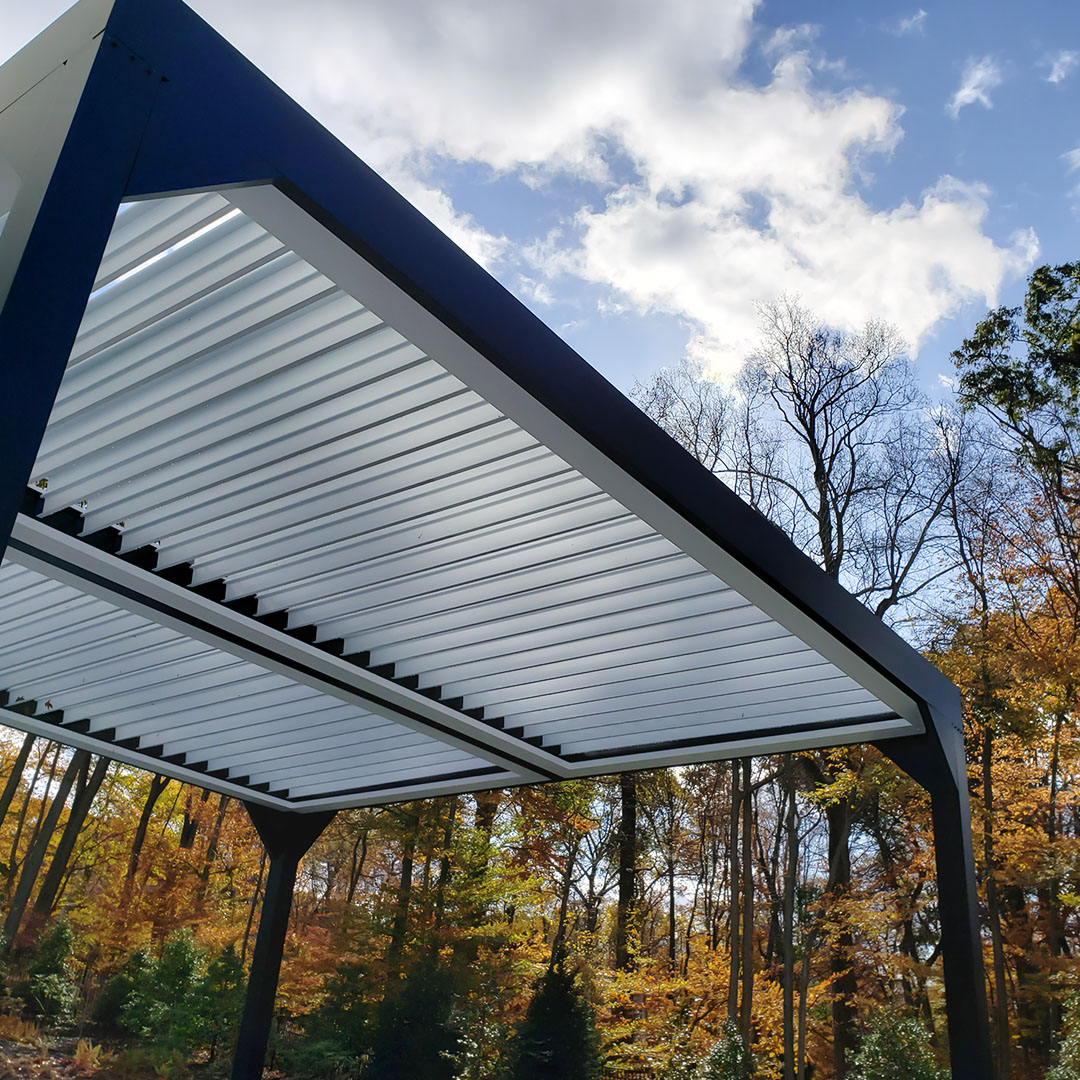
There’s no way around it, a louvered roof creates more difficult engineering problems than a fixed patio cover. The blades rotate, they have to seal against each other when closed, and the whole assembly lives outdoors through heat, rain, and freeze cycles. Extruded 6063-T6 aluminum provides all the charictaristics to check those boxes:
- Corrosion resistance. Aluminum forms its own protective oxide layer, and 6063 holds up well against moisture and salt air where steel would rust.
- High strength-to-weight ratio. Aluminum is roughly a third the weight of steel. This allows louvers and beams to span further without overloading the posts.
- Dimensional consistency. Every profile comes off the same die, so louvers and frames achieve tight, repeatable tolerances and seal properly.
- Finish quality. A clean, uniform extruded surface is the ideal foundation for a high performance coating, which takes us to our next section.
The finish is only as good as the metal under it
Here is the part of the conversation that almost no one gets into: the alloy and the finish are not two separate decisions. They both work together to create a robust final product since a coating can only perform as well as the surface it is bonded to.
At Apollo, we finish our extrusions with AAMA 2604 powder coatings and electrostatically applied polymer baked enamels. That is a mouthful, so here is what each piece means and why it depends on the metal underneath.
What AAMA 2604 actually guarantees
AAMA refers to the American Architectural Manufacturers Association, which publishes the coating specifications the architectural industry uses to grade outdoor finishes. There are three tiers:
| Spec | Tier | Roughly what it promises |
|---|---|---|
| AAMA 2603 | Good | Basic, mostly interior or residential, about one year of color and chalk resistance |
| AAMA 2604 | High performance | Intermediate, around five years of South Florida exposure with controlled color and gloss loss |
| AAMA 2605 | Superior | Top tier, around ten years, typically 70% PVDF coatings used on monumental commercial buildings |
AAMA 2603 – Basic, mostly interior or residential, about one year of color and chalk resistance
AAMA 2604 – Intermediate, around five years of South Florida Exposure with controlled color and gloss loss
AAMA 2605 – Top tier, around ten years, typically 70% PVDF coatings used on monumental commercial buildings
To carry the AAMA 2604 rating, a finish has to clear real testing. It must hold color change to within about five Hunter units after five years of South Florida sun, retain at least 30 percent of its gloss, and survive 3,000 hours of salt spray exposure without the coating lifting. That is a serious bar, and it sits well above the ordinary baked enamels found on most residential outdoor products.
Honest note. AAMA 2604 is the high performance tier, not the absolute top. AAMA 2605, the 70 percent PVDF formula used on skyscrapers, sits above it. We use 2604 because it delivers the durability a residential and light commercial pergola needs, at a finish quality that stays true for years, without the cost of a monumental cladding spec. If a competitor only meets 2603, that is a meaningful step down and worth asking about.
Electrostatically applied baked enamel, in plain terms
The application method matters as much as the coating chemistry. Here is the process in order:
- The bare extrusion is cleaned and pretreated so the coating has something to grip.
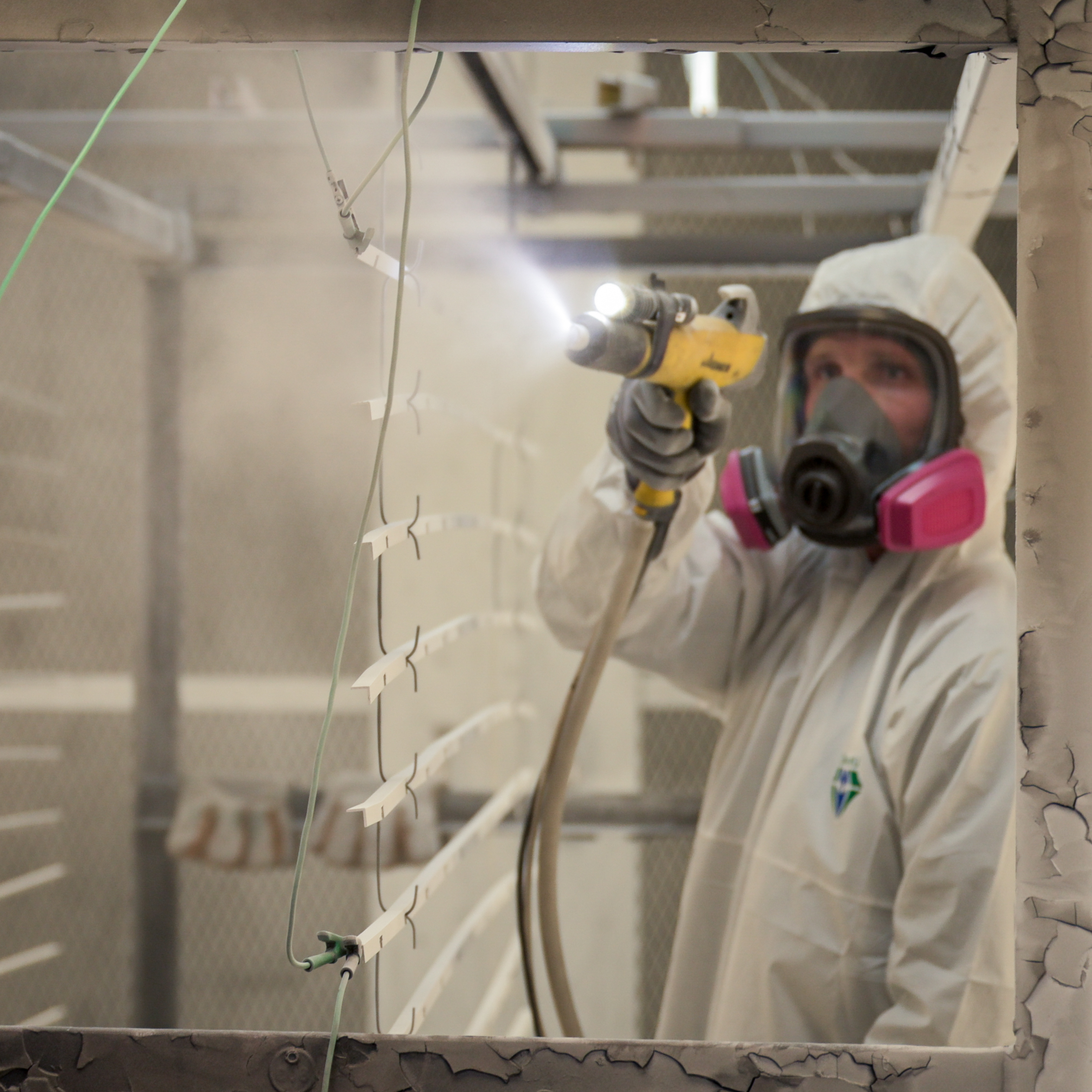
- The coating particles are given an electrostatic charge, and the grounded aluminum part attracts them.
- Because the charge pulls the particles evenly onto every face, including edges and inside corners, the coverage stays uniform rather than thick in some spots and thin in others.
- The part is then baked in an oven, where the coating flows together and cures into a hard, continuous film.
Electrostatic application works because aluminum is electrically conductive and can be grounded cleanly. The smooth, even surface of an extruded 6063 profile gives the charged particles a consistent target, so the cured powder coating comes out uniform across the whole part.
Why the alloy and the finish have to be chosen together
Think of the result as two layers of defense that only work as a pair:
- The 6063 alloy resists corrosion at the base metal level, so even at a scratch or a cut edge, the exposed aluminum does not rust the way steel would.
- The AAMA 2604 finish protects the surface above it, holding off the ultraviolet fade, chalking, and gloss loss that age a coating prematurely.
A premium finish over a poor base material fails early, because the coating is only as stable as the bond beneath it. A good alloy under a cheap finish fades anyway. You need both, specified together, which is why a serious manufacturer can name the alloy, the temper, the forming method, and the coating spec in a single breath.
What to ask when comparing pergola brands
You do not need an engineering degree to separate an architectural grade product from a consumer one. Just ask these four questions:
- What alloy is the structure made of, and what temper? You want to hear 6063-T6 or a comparable named alloy and temper, not just the word aluminum.
- Is the aluminum extruded, roll-formed, or cast? Extruded profiles are the mark of a structural design.
- What coating specification does the finish meet? AAMA 2604 or 2605 is a real answer. Silence, or a vague reference to powder coat with no spec, is not.
- Can the company explain how those choices fit together? The ability to connect the metal to the finish is a good sign the product was engineered rather than assembled.
At Apollo, our profiles are extruded 6063-T6, finished with AAMA 2604 powder coatings that are electrostatically applied and baked into an enamal, and we are glad to walk you through the engineering behind any part of the system. If you want to learn more about how our systems are built, reach out to our team or check out our product page here. We’re happy to assist in your journey to luxury outdoor living.
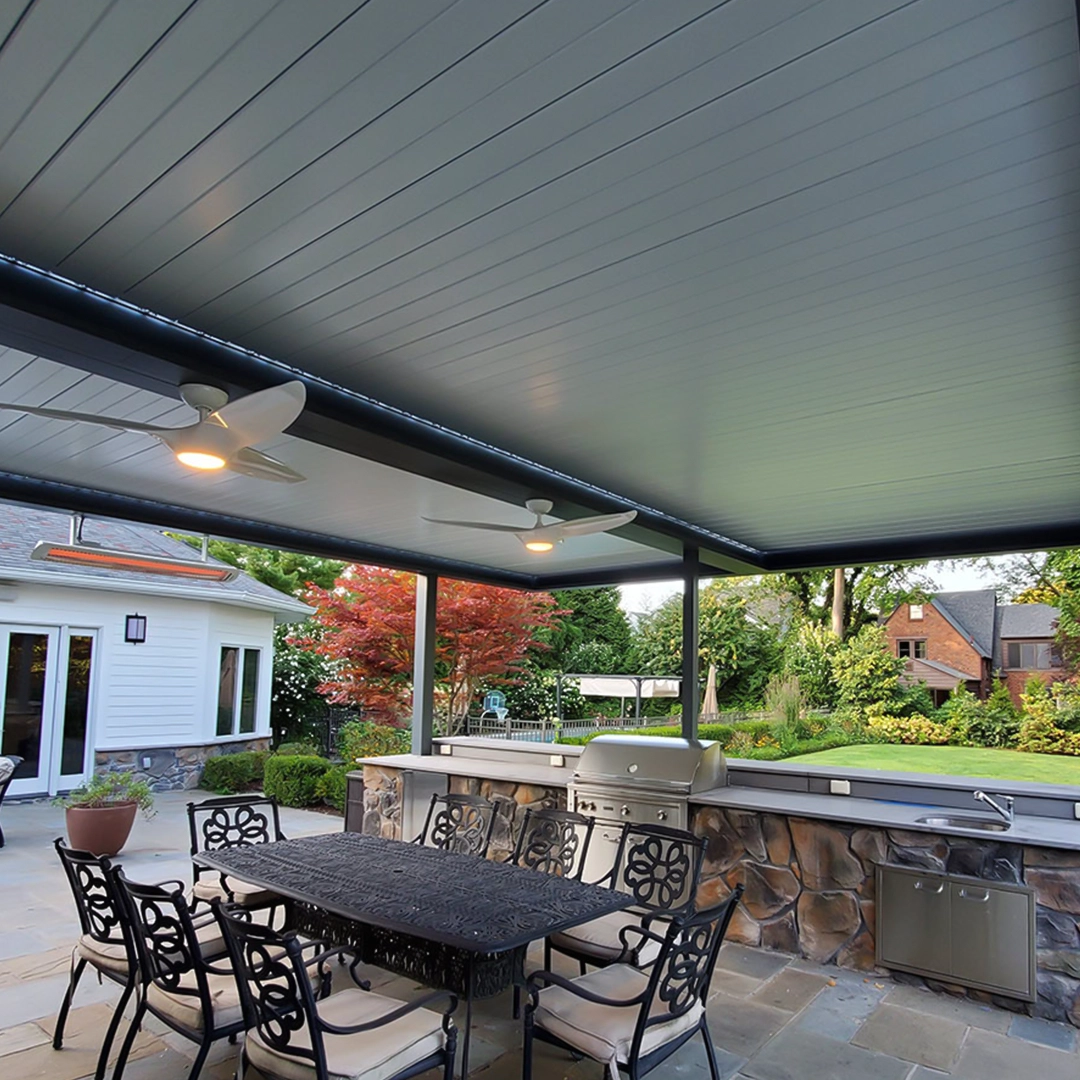
Discover Your Ideal Outdoor Space with Apollo
Crafting the perfect louvered pergola requires precision, innovation, and an eye for aesthetics. Apollo leads the way in providing top-tier designs that effortlessly blend form and function. Whether you’re envisioning a cozy residential space or an expansive commercial setup, our custom louvered pergolas are tailored to fit projects of any scale. Ready to elevate your outdoor area? Let’s connect you with an Apollo dealer near you and bring your dream pergola to life.
Contact Us
Start your pergola project today and unlock the potential of your outdoor space. With your personal touch and our expertise, your backyard will become a captivating retreat you’ll adore and relish for years to come.
OPENING HOURS
Monday – Friday
8:00am – 5:00pm PST
If you’re looking for more backyard pergola ideas, check out our social media channels.
Let’s Begin Your Pergola Journey
Are you ready to embark on your journey to transform your outdoor space? Our team at Apollo Opening Roof is here to guide you every step of the way. Contact us today to start designing your dream backyard pergola.
Visit our Gallery and explore our extensive range of louvered patio covers, each one a testament to craftsmanship, innovation, and elegance. Your backyard paradise awaits – let’s make it a reality together.
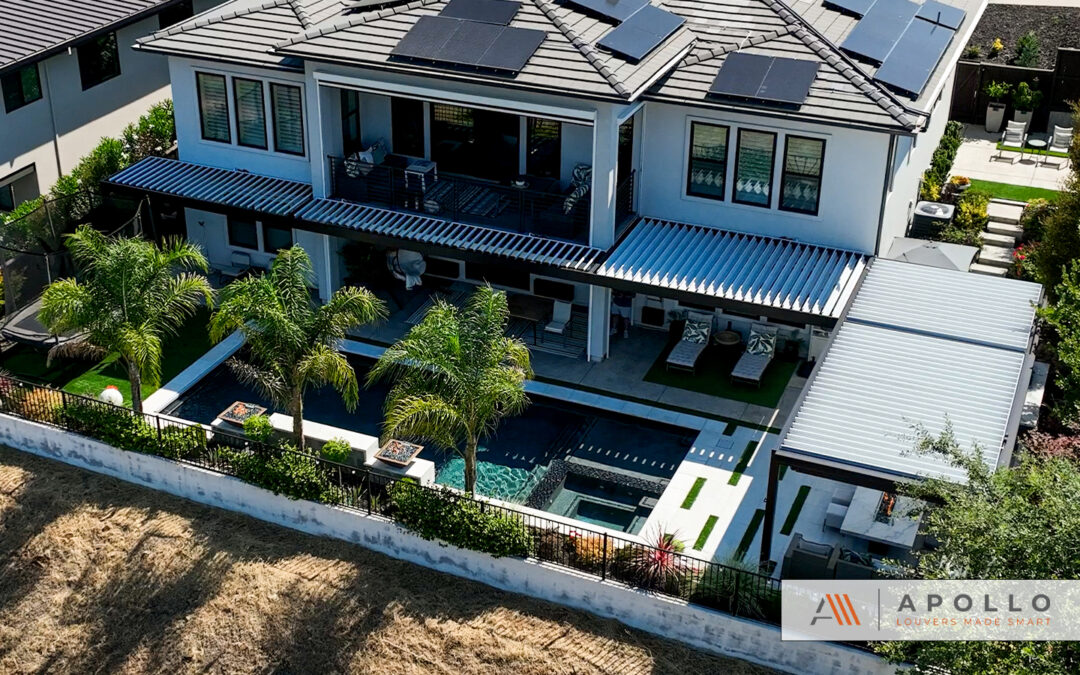
Pool Pergola Ideas: A Guide to Poolside Pergola Designs
From dramatic over-the-pool designs to relaxed poolside cabanas and spa covers, this guide breaks down the most popular swimming pool pergola ideas and what to plan for before you build.
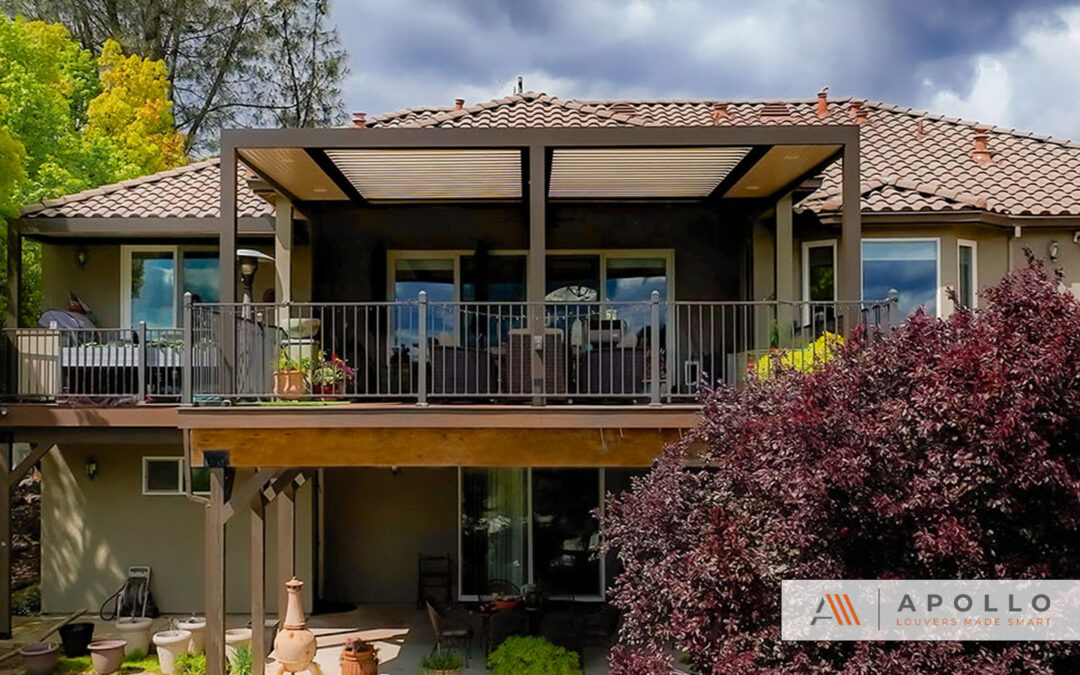
Can You Install an Aluminum Louvered Pergola on a Raised Deck?
A raised deck is one of the best spots for a louvered roof, but it takes real engineering, not a prefab kit. Here’s how load, wind, water, and power get handled for a safe, custom installation.
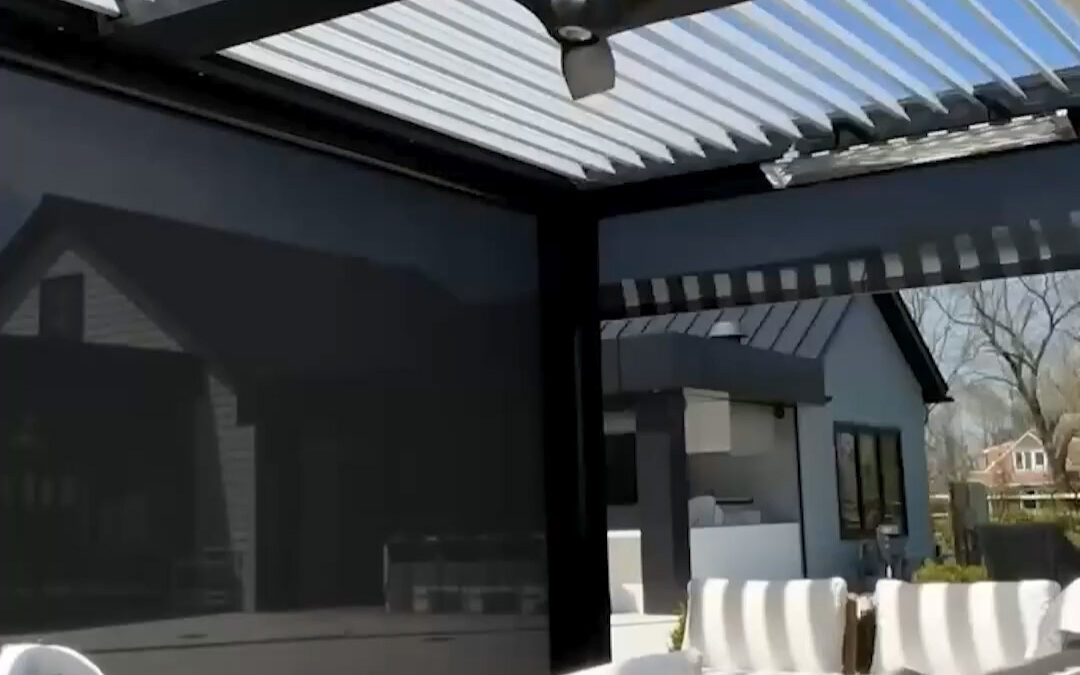
What Is a Louvered Pergola?
A louvered pergola is an outdoor roof with adjustable slats you can open, close, and tilt on demand. Here is how it works and what to look for.